5 BRUTAL AI Prompts You Need To Use Before It's Too Late
Most AI content is comfortable. These prompts aren't. Copy them, paste them into a free AI chat, fill in the brackets, and brace yourself for the answers.
Your spouse won't tell you the unfiltered version.
Your doctor softens it for compliance, and because they've given up telling people how to fix their diet and exercise.
Your financial advisor has a billing relationship to protect.
Your friends like you too much and are too polite.
AI has none of those incentives.
The five prompts below force AI to give you the answer it would give if you were paying for an unflinching expert with no financial stake in your comfort.
Run them on the version of AI you already use. Use your real numbers, not the version you tell people at parties. The whole point is to get an answer you can't get anywhere else.
These prompts are just the opening plays. Be prepared for full conversations with AI about the absolute essentials of your life.
One warning before you start: these prompts work best when you're in a stable headspace. If you're in crisis, talk to a person, not an AI. Otherwise, this is the doorway. Walk through it.
Get Powerful, Leading-Edge Tips Like This About Once A Month
Short, useful emails written for adults 50+. No spam, no hard sell, unsubscribe anytime. Drop your email below and you’ll be the first to see the next round of prompts and tactics.
Where Am I Headed? The 10-Year Health Projection.
The version your doctor doesn't volunteer because they're complying with your stated preferences and 12-minute appointment window. This prompt projects what your next decade actually looks like at your current trajectory — and pinpoints the single highest-leverage change.
You are an actuarial health analyst. Given my current data, project what my next 10 years actually look like at my current trajectory — not the optimistic version.

My data:
- Age and sex: [AGE], [SEX]
- Height and weight: [HEIGHT / WEIGHT]
- Last labs (rough numbers): A1C [X], LDL [X], HDL [X], BP [X/X]
- Medications and supplements: [LIST]
- Exercise per week: [HONEST minutes/week, not aspirational]
- Sleep average: [HOURS / quality]
- Alcohol per week: [DRINKS]
- Smoking history: [NEVER / FORMER / CURRENT]
- Family history of major disease: [LIST: heart, cancer, diabetes, dementia]
- Current diagnosed conditions: [LIST]
- Daily stress level (1-10): [X]

Return:
1. Expected health trajectory by age 60, 65, 70, 75 if nothing changes
2. The 2-3 conditions I'm statistically most likely to develop in the next decade given my stack
3. The single highest-leverage change (just ONE — the one with the biggest expected-years-gained effect for someone exactly like me)
4. The 2-3 things my doctor probably hasn't said out loud because they're complying with my stated preferences
5. How my projected health affects my financial plan — when do healthcare costs realistically explode for someone on this trajectory?

I need the unfiltered version. I'll get the soft version from everyone else.
A 10-year projection is also a 10-year action plan, and AI is the partner you build it with. The same chat can write a doctor-visit agenda that gets the specific tests ordered (the ones that catch the projected problem early), translate your lab results into plain English when they come back, design an exercise plan that works around your existing joint issues, separate evidence-backed supplements from marketing claims, and build a weekly habit-tracking framework you can actually stick to. You can't change the trajectory you don't see — but seeing it AND having an action partner in the same hour is genuinely new. None of this existed two years ago.
Am I Replaceable? The Career vs AI Audit.
The version HR can't legally give you and your manager isn't paid to deliver. This prompt asks AI to rate the replacement risk on each of your daily tasks — and tell you exactly which capabilities move you decisively into the irreplaceable column.
You are a labor economist who tracks AI's impact on knowledge-work jobs. I want an unflinching read on my replacement risk.

My role:
- Job title and industry: [TITLE / INDUSTRY]
- Years in this role: [YEARS]
- Daily activities, in honest order of time spent: [LIST 5-8]
- Skills I think make me irreplaceable: [LIST]
- Education and credentials: [LIST]
- Salary: $[AMOUNT]
- Age: [AGE]

For each of my daily activities, estimate:
1. The probability AI replaces or dramatically reduces it within 24 months
2. The probability AI replaces it within 5 years
3. Whether the replacement is "fully automated" or "supervised by one person doing the work of five"

Then tell me:
1. The 2-3 capabilities I should build NOW to move myself decisively into the irreplaceable column for my industry
2. Whether my current employer is likely to invest in retraining me or quietly transition the role
3. If I were laid off tomorrow at my age and salary, how long my market value persists and what I'd need to pivot to
4. The honest answer: should I be looking for a new role, retraining, or accepting that this is a glide path to retirement

No gentle framing. I want the actual labor-market read.
Knowing which of your tasks are AI-replaceable is the same thing as knowing exactly what to invest in. The same AI that just flagged your role as vulnerable can build a 90-day learning plan to add the irreplaceable capability, write the proposal that positions you as the AI-fluent person on the team (a promotion path, not a downsizing one), surface 3 adjacent roles where your decades of experience are MORE valuable than they are in your current job, and draft the LinkedIn post that publicly positions you as someone who got ahead of the curve. "Replaceable today" doesn't mean "replaceable in 18 months" — but only if you start now, and only if you know which lever moves first.
The Business Idea Analyzer — Is This Idea Real?
For the project, business, or career pivot you keep talking about but haven't started. This prompt makes AI play a skeptical VC who's seen 1,000 ideas and tells you the 3 fatal flaws an experienced investor would spot in 90 seconds.
You are a venture capitalist who has reviewed 1,000+ business and project ideas and has zero polite incentive to flatter me. Stress-test the idea I'm about to describe.

The idea (one paragraph): [DESCRIBE]

What I think makes it work: [LIST]
What I think the risks are: [LIST]
Money / time I'm willing to put in: [AMOUNT / HOURS PER WEEK]
My personal context: [AGE, FAMILY OBLIGATIONS, SAVINGS RUNWAY]

Tell me:
1. The 3 fatal flaws an experienced VC would spot in 90 seconds (be specific to this idea — no generic "marketing is hard")
2. The 3 reasons it could actually work (only if they exist — don't invent them)
3. Who is the actual buyer, what they're paying for an alternative right now, and why they'd switch
4. The single cheapest test I could run in 7 days that would prove or kill the core assumption
5. The honest assessment: pursue, kill, or refine — and if refine, what's the smallest version worth building

Don't humor me. My spouse already does that. I need the read I'd get if I paid for it.
The 3 fatal flaws aren't a kill order — they're the to-do list. The same AI that just told you why your idea probably won't work can rework the model to eliminate the worst flaw, design the cheapest possible test that proves or kills the riskiest assumption in 7 days, draft the first version of a landing page that gets pre-orders before you build anything, write the script for the 5 customer interviews that validate or invalidate the core demand, and outline the smallest version worth shipping if you decide to refine. A brutal early read often turns a worse idea into a workable one — the people who got there had this conversation early, when refining was still cheap.
Will I Outlive My Money? The Honest Forecast.
The version your financial advisor won't run, because the answer might cost them a client. This one runs the math against three market scenarios and tells you the actual percent chance you run out of money before age 90.
You are a retirement risk analyst. I need an honest Monte Carlo simulation for my retirement, not optimistic assumptions.

My situation:
- Age: [YOUR AGE]
- Current savings (all retirement + non-retirement): $[AMOUNT]
- Annual spending (real, not what I tell people): $[AMOUNT]
- Expected pension + Social Security combined per year: $[AMOUNT]
- Spouse situation: [working / retired / none] with income $[AMOUNT]
- Major debts: [list with balances]
- Family longevity (parents / grandparents): [late 70s / mid 80s / 90+]
- Health stack: [diabetes / heart history / cancer history / clean]

Run the brutal Monte Carlo against three market scenarios (bear, average, bull) over 30 years.

Return:
1. Probability I run out of money before age 90 in each scenario
2. The exact age I most likely deplete savings in the worst case
3. The one or two changes (cut spending by X, work part-time until Y, downsize, delay SS, etc.) that would move my survival probability the most
4. The 3 assumptions in my plan that look the most fragile
5. What I'd need to do if a 2008-style crash hit me in year 3 of retirement

Be direct. I'd rather hear hard truth now than soft lies for the next 20 years.
Once you see the actual numbers, AI becomes the planning partner that fixes them. The same chat can build the downsizing or relocation model, find your optimal Social Security claim age (often 2-4 years different than what you assumed), simulate a part-time consulting income that closes the gap, identify the budget categories where small cuts compound into major retirement safety, and even draft the script for the awkward "we need to revise our plan" conversation with your spouse. The brutal answer makes the next conversation a planning conversation instead of a panic one — and most of the moves you can take are cheaper than you think.
The Relationship Mirror — What They're Not Telling You.
The version a friend won't give you because they like you. This prompt makes AI play the OTHER person in one of your important relationships — and tell you what they're probably feeling that they haven't said out loud.
You are a couples and family therapist with 30 years of practice and zero financial interest in keeping me a client. I want the unflinching read on one of my relationships.

The relationship:
- Who: [SPOUSE / ADULT CHILD / SIBLING / BUSINESS PARTNER / PARENT]
- Length of relationship: [YEARS]
- Current dynamic in one paragraph (be honest): [DESCRIBE]
- The recurring conflict or unresolved tension: [DESCRIBE]
- What I think the other person is feeling: [GUESS]
- What I might be doing that contributes (best guess): [GUESS]

Now play the OTHER person — not in a sympathetic way, in an accurate way. Based on the dynamic I described, tell me:
1. What they're probably feeling that they haven't said out loud
2. The 2-3 specific behaviors of mine they likely resent or fear, even if they love me
3. The thing they wish I'd ask but haven't
4. The story they're probably telling other people about me when I'm not in the room
5. The single move on my part that would most realistically shift the dynamic in the next 30 days

I want the version a friend won't give me. The point isn't to be hurt — it's to know what I'm working with.
Knowing what they're not telling you is the only way to fix a relationship that's been quietly drifting. The same AI that just played the other person can script the conversation that opens the door instead of closing it, draft the letter that says what you've been trying to say without the words being weaponized, role-play the response to their most likely defensive reaction, and help you decide what's worth bringing up vs what's worth letting go. Most relationship damage comes from things never said — and AI is the rehearsal partner that lets you find the words before you need them, in a place where the wrong draft costs nothing.
How to actually use these
If you've never copy-pasted into AI before, here's the entire workflow:
- Open gemini.google.com (sign in with your Google account — it's free, no credit card)
- Click the Copy button on any prompt above
- Paste it into Gemini's text box
- Replace the parts in
[BRACKETS]with your real information - Hit enter. Read the answer. Don't argue with it — sit with it for an hour.
Prefer ChatGPT or Claude? They work identically. chatgpt.com or claude.ai. Both free.
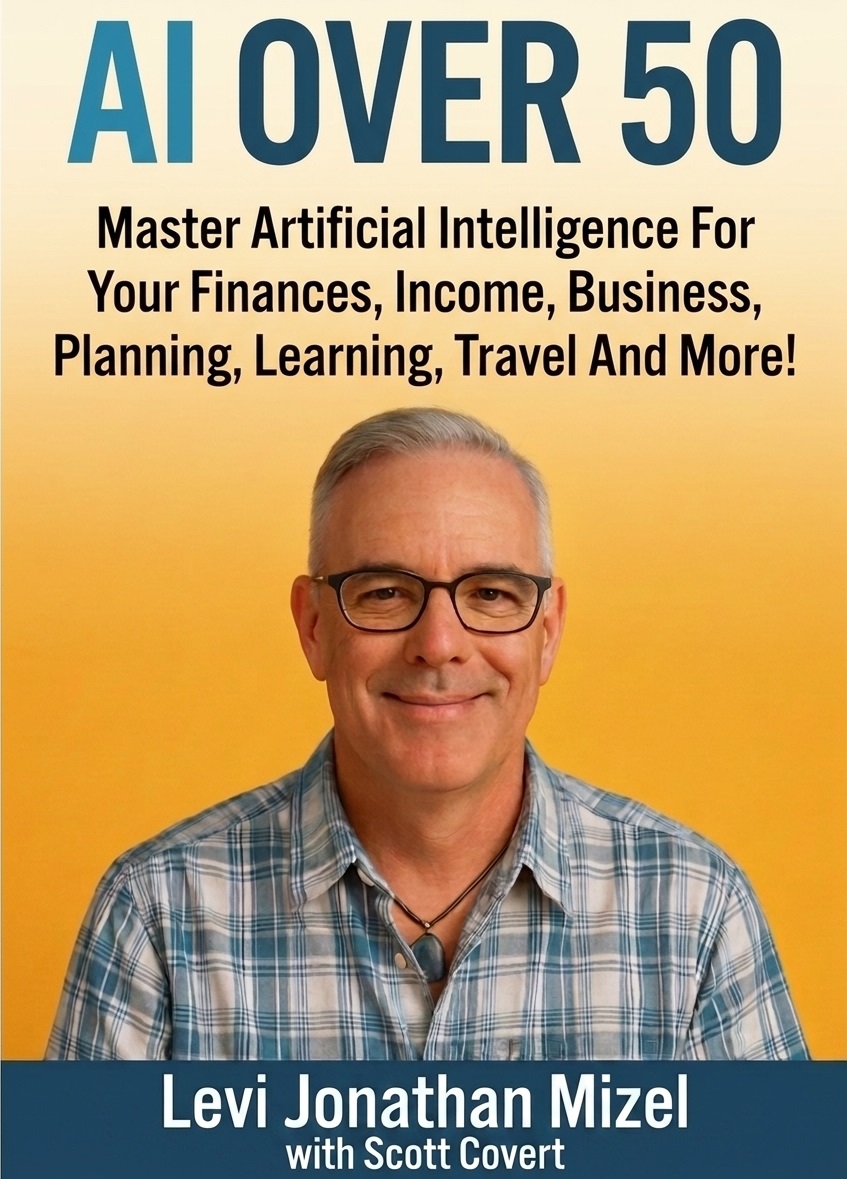
Get The Real Tips. Free.
Tips about using AI when you're over 50 — for income, business, curiosity, planning, family, research, travel, and more. Short, useful, written for adults 50+. No spam, no hard sell, unsubscribe anytime.