5 AI Prompts That Turn 30 Years Of Experience Into An Unfair Advantage
AI is supposed to be the threat to your career. The reverse is true. The people winning right now are 50+ professionals using AI as a force multiplier on decades of judgment and context.
The narrative is that AI ends careers. The narrative is wrong.
AI is the great equalizer for execution — writing, design, code, analysis. Anyone can produce a polished output now. What AI can’t do is the part you spent 30 years building: pattern recognition across a thousand specific situations, knowing why an obvious-looking choice actually doesn’t work, recognizing a sham client or a sham vendor by tone, understanding which detail the founder is hiding.
AI plus 30 years of judgment is a different person than AI alone.
These five prompts position you to monetize the judgment AI doesn’t have. Each one targets a specific way to convert your experience into income, status, or a foothold — without working harder, building a brand from scratch, or competing with 25-year-olds at their game.
This pack assumes you have real expertise. If you’ve spent decades in finance, healthcare, education, sales, ops, management, trades — you do. These prompts surface it. They don’t fabricate it.
Want Tips Like These About Once A Month?
Short, useful emails written for adults 50+. No spam, no hard sell, unsubscribe anytime.
Launch A Consulting Practice In My Field Without Quitting My Job.
Most over-50 professionals leave money on the table for years because the consulting setup feels heavy — LLC, contracts, marketing, pricing. This prompt makes AI the operations team that gets you to your first paid client in 30 days.
You are a consulting business advisor who has helped hundreds of mid-career professionals launch part-time practices alongside their current jobs. I have decades of expertise but haven't formally consulted. Build me the 30-day launch plan.

About me:
- My current role: [TITLE / INDUSTRY / YEARS IN ROLE]
- The specific expertise I'd consult on: [DESCRIBE — be narrow, not broad]
- The TYPE of client most likely to value that expertise: [SIZE OF COMPANY, INDUSTRY, ROLE OF DECISION MAKER]
- The specific problem they have that I solve: [DESCRIBE]
- My time availability per week: [HOURS]
- My target first-year revenue (realistic, not aspirational): $[AMOUNT]
- Anyone in my network who might be a first client or referral: [LIST or "I haven't asked"]
- My state (US): [STATE — relevant for entity setup]
- My day job's policy on outside work: [CHECKED / CONFLICTS POSSIBLE / UNCLEAR]

Build me a 30-day launch plan:

Week 1: Foundation
- The simplest legal entity setup (LLC vs sole prop vs S-corp election) for my state and revenue target. Skip the over-engineered advice.
- The bank account, invoicing tool, and contract template I need (recommend specific tools that don't cost $200/month)
- The 1-page "scope of services" document I'll send any prospect — written in their language, not mine
- The pricing structure: hourly vs project vs retainer, and what's defensible for my expertise

Week 2: First Conversations
- The exact email/message to send to 10 specific people in my existing network — wording that surfaces consulting opportunity without sounding desperate
- The discovery call structure: 30 minutes, 5 questions, end with a proposal or polite exit
- The follow-up cadence that doesn't feel pushy

Week 3: First Proposal
- A proposal template I can adapt for the first real opportunity that comes up
- The pricing conversation script — how to anchor high, how to handle pushback, how to walk away
- The contract clauses I MUST include (scope, payment terms, IP, indemnification, termination)

Week 4: First Client (or hard data on what's not working)
- The 5-question after-action review to figure out what worked and what didn't
- The decision framework: keep going? Refine the offer? Different audience? Kill it?

End with: the single thing I'm most likely to over-think and the single thing I'm most likely to skip. Tell me which to ignore and which to act on.
After your first client, the same AI becomes your operations partner: drafting proposals to match the next opportunity, building the case studies that convert future prospects, designing your LinkedIn presence to attract inbound work, and pricing each new project against what similar consultants charge. Most consulting expertise is invisible until someone packages it. AI is the packager.
Rewrite My LinkedIn So It Generates Inbound Instead Of Sitting There.
Most over-50 LinkedIn profiles read like a resume. The audience LinkedIn rewards (and inbound recruiters/clients hunt for) doesn’t care about your job history. They care about the problem you solve. This prompt makes the swap.
You are a senior LinkedIn strategist who specializes in helping experienced professionals attract inbound opportunity. My profile reads like a resume. Make it work for me.

About me:
- Current role and industry: [TITLE / INDUSTRY]
- Career arc in one paragraph: [DESCRIBE]
- The kind of opportunity I want LinkedIn to generate: [INBOUND CONSULTING, BOARD ROLES, JOB OFFERS, BOOK DEAL, SPEAKING, CLIENTS, PARTNERSHIPS, ETC.]
- My core expertise / superpower (be specific, not "leadership"): [DESCRIBE]
- The audience that should care about my profile: [WHO IS THE PERSON WHO SHOULD HIT "CONNECT" OR DM ME?]
- Industries or types of companies that buy what I'd offer: [LIST]
- 1-3 specific results I've delivered that would impress that audience: [BRIEFLY]
- Current profile elements I want to keep: [LIST]
- Things about my profile that feel off: [DESCRIBE]
- My comfort level with self-promotion (1-10): [NUMBER]

Rewrite for me:

1. The HEADLINE (220 characters) — the most important real estate. Make it problem-focused, not title-focused. Test 3 variations: aspirational, operational, conversational.

2. The ABOUT section (2,000 characters max). Open with a 1-sentence hook. Spend 60% on what I do for whom, 30% on credibility, 10% on what I do for fun. Write in first person, conversational, no jargon.

3. The CURRENT ROLE description — reframe the responsibilities as outcomes for the kinds of people I want to attract.

4. The PAST ROLES — collapse to 2-3 sentences each, highlighting the pattern across them (the through-line of my expertise) rather than the tasks.

5. The SKILLS section — top 10 in the language MY AUDIENCE searches for, not the language HR uses.

6. The CONTENT plan — 4 specific post topics to publish in the next 30 days, each tied to my expertise and likely to surface me in feeds.

7. The OPEN-TO section — what to make visible, what to keep private.

End with: the one specific change that has the biggest expected effect on inbound for my situation.
Once the profile is live, the same AI helps you draft posts on a rhythm (1-2 per week, written in your voice), respond to inbound DMs without sounding scripted, draft the “coffee chat” messages that convert into real conversations, and analyze whether your profile is showing up in the searches you want. LinkedIn is a slot machine for inbound at 50+. The right profile pulls the lever for you every time someone with budget searches for what you do.
Outline The Course Or Book That Monetizes My Expertise.
Everyone tells you to “productize your expertise.” Nobody tells you HOW. This prompt is the structured intake that turns your messy expertise into a sellable outline a buyer pays for.
You are a course / book strategist who specializes in helping experienced professionals package what they know. I've been in [FIELD] for [YEARS] and I want to turn that expertise into a paid course or book. Help me figure out what to build and for whom.

About me:
- Field / expertise: [DESCRIBE — be specific. "Marketing" is too broad. "Crisis communications for hospital systems" is right.]
- Years in the field: [NUMBER]
- The 5-10 things I know that most people in my field DON'T: [LIST — even guesses]
- The mistakes I see other people make over and over again that I now see in 60 seconds: [LIST]
- The questions colleagues / clients ask me again and again: [LIST]
- Who in my network has paid for help with what I know (formally or informally): [DESCRIBE]
- My target income from this project: [HOBBY $1-10K, SIDE $20-100K, REPLACEMENT $100K+]
- My comfort with selling: [LOW / MEDIUM / HIGH]
- My realistic time commitment: [HOURS PER WEEK / TARGET FINISH DATE]
- Course vs book vs hybrid preference: [DESCRIBE]

Build me:

1. The narrow audience definition (1 sentence). Not "small business owners." Something like "first-time founders in regulated industries who just hired their first employee." Narrow wins.

2. The transformation promise — the specific outcome a buyer gets. Not "you'll understand X." Something like "you'll have ___ in ___ days." Result-based, not topic-based.

3. The outline — 7-12 modules/chapters. Each one is a topic AND a transformation milestone for the buyer.

4. The pricing — three tiers: low-cost book (~$20-30), mid-tier course (~$200-500), high-tier coaching/cohort (~$1,500-5,000). Tell me which one to LEAD with given my goals.

5. The proof of concept — the smallest thing I can build and sell in 30 days to validate demand BEFORE I write a 200-page book or build a 12-module course. This is the most important answer.

6. The audience pool — where the 100 first buyers actually hang out (specific subreddits, specific Slack groups, specific email lists, specific industry events).

7. The first-month plan: build the proof-of-concept, validate, then go or pivot.

Tell me what to ship in 30 days, not in 6 months.
Once the proof-of-concept sells (or fails to), the same AI helps you scale: drafts module content from your interview transcripts, writes the email sequence that pre-sells the bigger product, creates the affiliate program that lets others sell for you, and surfaces the partnership / cross-promo opportunities your direct competitors don’t see. Most experts “productize” their expertise wrong because they build the product before validating the audience. AI flips that order.
How to actually use these
If you’ve never copy-pasted into AI before, here’s the workflow:
- Open gemini.google.com (sign in with your Google account — free, no credit card)
- Click the Copy button on any prompt above
- Paste it into Gemini’s text box
- Replace the parts in
[BRACKETS]with your real information - Hit enter. Read the answer. Reply with follow-ups — this is a conversation, not a one-shot.
Prefer ChatGPT or Claude? They work identically. chatgpt.com or claude.ai. Both free.
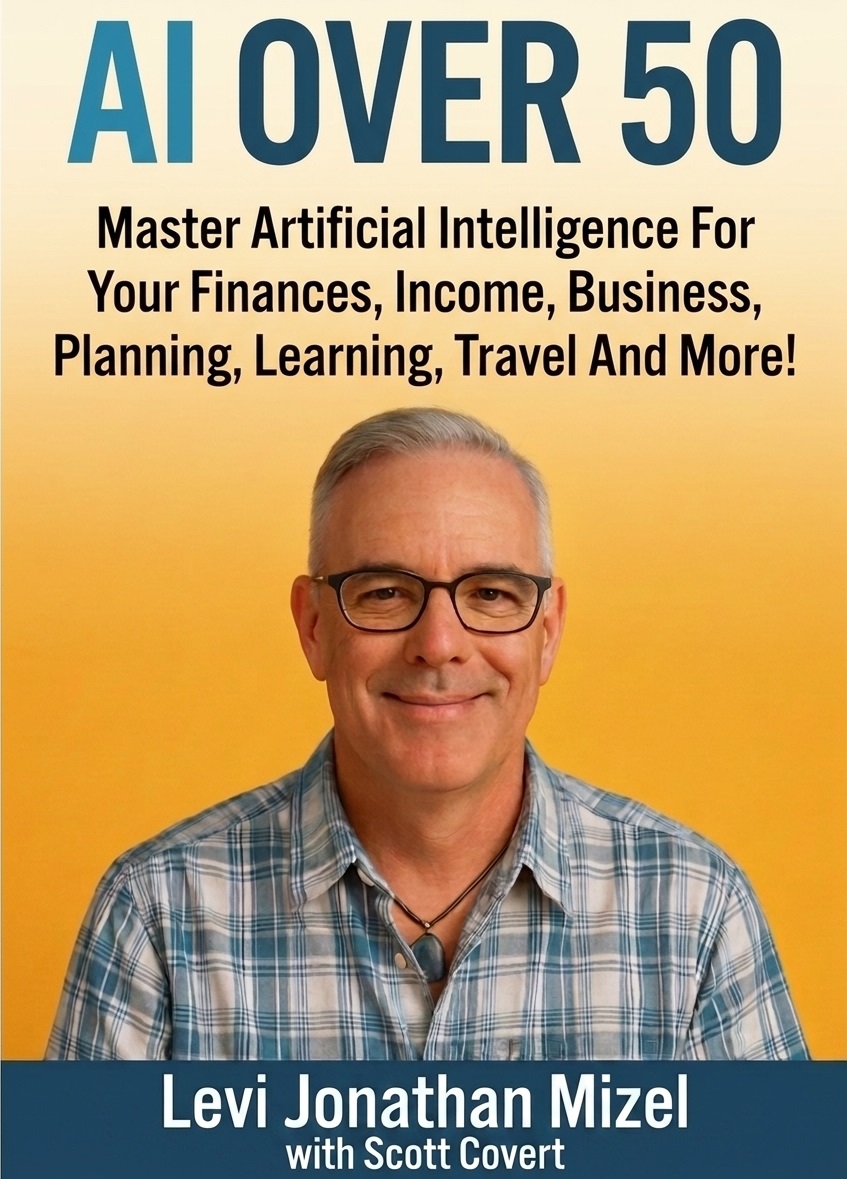
Get The Real Tips. Free.
Tips about using AI when you're over 50 — for income, business, curiosity, planning, family, research, travel, and more. Short, useful, written for adults 50+. No spam, no hard sell, unsubscribe anytime.